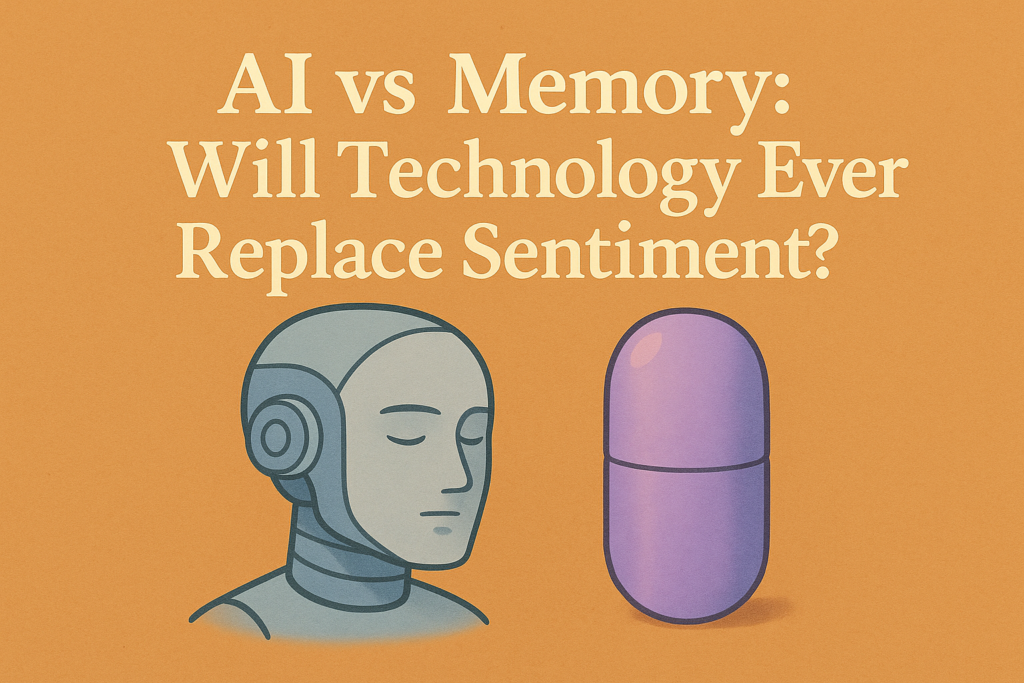
Can AI replace human memory? The technology can already summarise your entire camera roll, generate fake nostalgic photos, and reconstruct events you barely remember. But there is something AI still cannot do, and it matters more than you think.
What Makes a Memory “Real”?
We often think of memory as a snapshot. But memories are more than images or audio. They’re layered, made of emotion, context, and personal meaning. A photo might show your birthday party, but it can’t capture the smell of the cake, the warmth in the room, or the little details only you noticed.
That’s where sentiment lives: in the things you can’t upload
How AI Is Changing the Way We Remember
Artificial intelligence is rapidly shaping how we interact with our memories. From Apple Photos to ChatGPT, here’s how:
- Memory Recognition: AI can now identify people, places, and events across your media, auto-organising your life story.
- Voice Synthesis: Tools can recreate a loved one’s voice from past recordings, making it possible to “hear” them again.
- Deep Nostalgia: AI-powered animation can bring still photos to life, making old memories feel newly vivid.
- Predictive Journaling: AI can help users generate entries based on tone, recent activity, or even emotional state.
- Smart Summarisation: Apps are creating AI highlight reels of your life, surfacing “important” moments without your input.
All of this sounds powerful. And it is. But is it enough?
The Sentiment Gap: What AI Still Can’t Do
No matter how advanced, AI still lacks something vital: personal context. It can’t know why a blurry photo means more than the perfect one, or why a broken keychain from a trip makes you emotional.
Here’s what AI can’t replace:
- The intent behind a message
- The handwriting in a letter
- The surprise in a moment you didn’t plan
- The emotion of remembering something long forgotten
Real memory is deeply human. It’s felt, not just stored.
Why We Still Need Sentimental Tools Like TimeLock
In a world where AI can automate almost everything, deliberate memory-keeping matters more than ever.
TimeLock was designed for exactly this purpose:
- You choose what to remember and when to revisit it.
- You can attach voice notes, letters, or emotional reflections, not just data.
- You’re building a memory for future feeling, not just future access.
It’s not about uploading life. It’s about preserving meaning.
AI Should Assist, Not Replace
The future of memory tech isn’t about choosing AI or emotion, it’s about letting them work together.
- AI can help organise and surface memories more easily.
- It can offer prompts or creative ways to reflect.
- But you provide the meaning.
That’s the power of tools like TimeLock: you stay in control of what matters. You choose what your future self or loved ones will receive, and when.
The Human Element Will Always Matter
Memory isn’t about data points. It’s about impact.
In 10 years, your AI might remind you of your holiday. But only your voice note can remind you how you felt sitting on that beach. Only your letter to your future self will capture what truly mattered at that time in your life.
AI might enhance how we store memories. But sentiment, that’s something only you can add.
Start Preserving What Matters Most
TimeLock lets you build digital time capsules filled with meaning, not just media.
Whether it’s a message to your partner, a memory of your child’s first words, or a reflection on your own growth, Time Lock ensures your feelings don’t get lost in the feed.
Because even in an AI-powered world, your emotions deserve a home.
Related Blog Posts to Explore
- AI, VR & Memory: The Future of Remembering
- Future Self Letters: A Tool for Mental Clarity
- Digital Memory Keeping vs Traditional Journaling
- Top 5 Apps for Preserving Digital Memories in 2025
Join us on the mission.