Introduction:
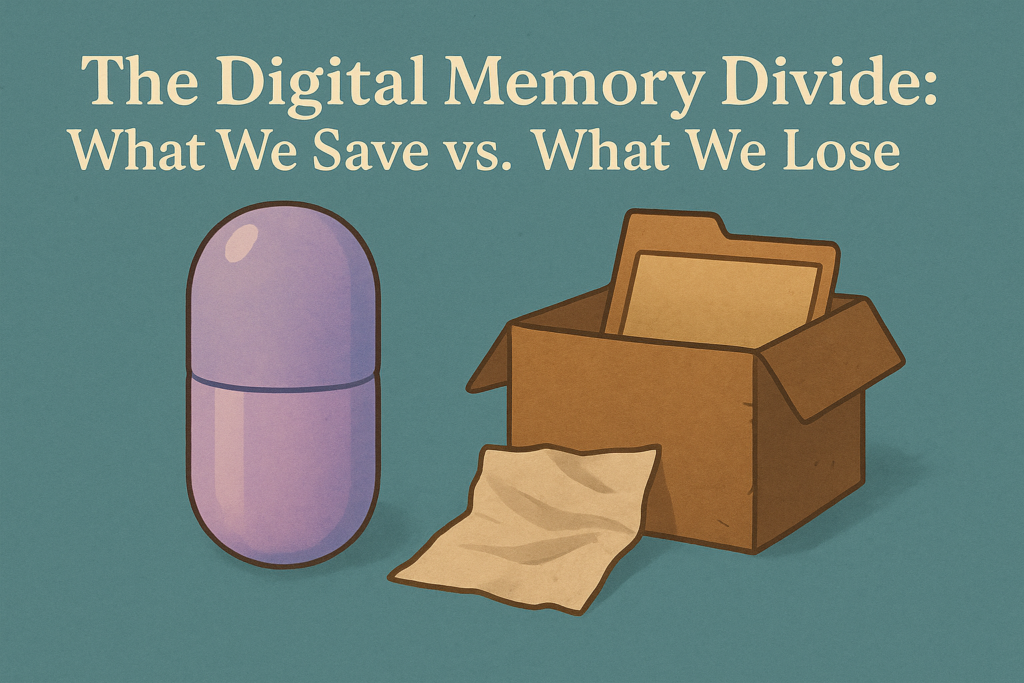
In today’s hyper-documented world, we’re taking more photos, recording more videos, and storing more data than ever before. But despite this abundance, something vital is missing. The digital age has changed not just how we save memories, but which ones we save. This split between what gets immortalised and what gets forgotten is known as the digital memory divide. And it’s reshaping the way we remember our lives.
What Is the Digital Memory Divide?
The digital memory divide refers to the growing gap between the moments we intentionally preserve and the fleeting data that disappears. On one side are curated Instagram posts, milestone reels, and cloud-backed family albums. On the other hand: Snapchat stories, unsaved voice notes, deleted texts, moments that vanish in seconds, never to return.
We’re living in an age where content is king, but not all memories get crowned.
The Illusion of “Saving Everything”
With terabytes of cloud storage and AI-powered photo libraries, it feels like we’re saving everything. But most of what we capture gets buried in digital clutter. How often do we scroll back through those 12,000 camera roll photos? Or open a file from 2017?
Just because something is technically stored doesn’t mean it’s remembered. The digital memory divide grows when our “saved” data lacks meaning, organisation, or emotional context.
Why Some Memories Stick, and Others Don’t
We tend to preserve what’s shareable: birthdays, holidays, graduations. These moments are polished, filtered, and uploaded. But the quieter memories, a meaningful conversation, a random act of kindness, the feeling of peace during a solo walk, often vanish. They don’t make it into the capsule of our digital lives, yet they shape us deeply.
Our current digital systems reward the spectacular, not the sentimental.
Algorithms and Ephemeral Culture
The platforms we use push us further into this divide. TikTok trends vanish in days. Instagram stories fade in 24 hours. Even our notifications are designed for instant reaction, not lasting reflection.
The more we engage with ephemeral content, the more we normalise forgetting. The algorithm rewards the now, not the forever.
The Emotional Cost of Forgetting
What’s at stake? A fractured sense of self. Memories ground us, they form identity, relationships, and legacy. When our digital archives are shallow or when meaningful moments are scattered across platforms, we lose coherence in our story.
There’s also anxiety in forgetting. Fear of losing old voice notes from a loved one. Regret over not saving more moments with friends. The emotional cost of this memory divide is real, and growing.
Bridging the Gap With Intentional Tools
Apps like TimeLock aim to flip this narrative. Instead of feeding the scroll, they invite you to pause, reflect, and preserve. By creating digital time capsules, whether for your future self, loved ones, or milestones, you’re choosing what matters most.
This kind of intentional saving helps bridge the digital memory divide. It’s not about capturing everything, it’s about capturing the right things.
Conclusion: Make Memory Count
We can’t escape the digital world. But we can take control of what we remember. In a time where data is endless but meaning is rare, the real value lies in intentional memory. Choose to preserve what moves you, not just what’s trending.
Because in the end, your digital memory isn’t just a folder, it’s your legacy.
Related Blog Posts to Explore
- What People Put in Time Capsules Around the World
- Digital Love Capsules: Save Your Story Together
- AI, VR & Memory: The Future of Remembering
- Why Social Media Isn’t a Real Memory Keeper
Join us on the mission.