Introduction
We live in a time when data is infinite, but attention is scarce. Every second, we create memories, capture content, and store information, but not all of it gets remembered. Both humans and machines face the same dilemma: what should be kept, and what should be let go?
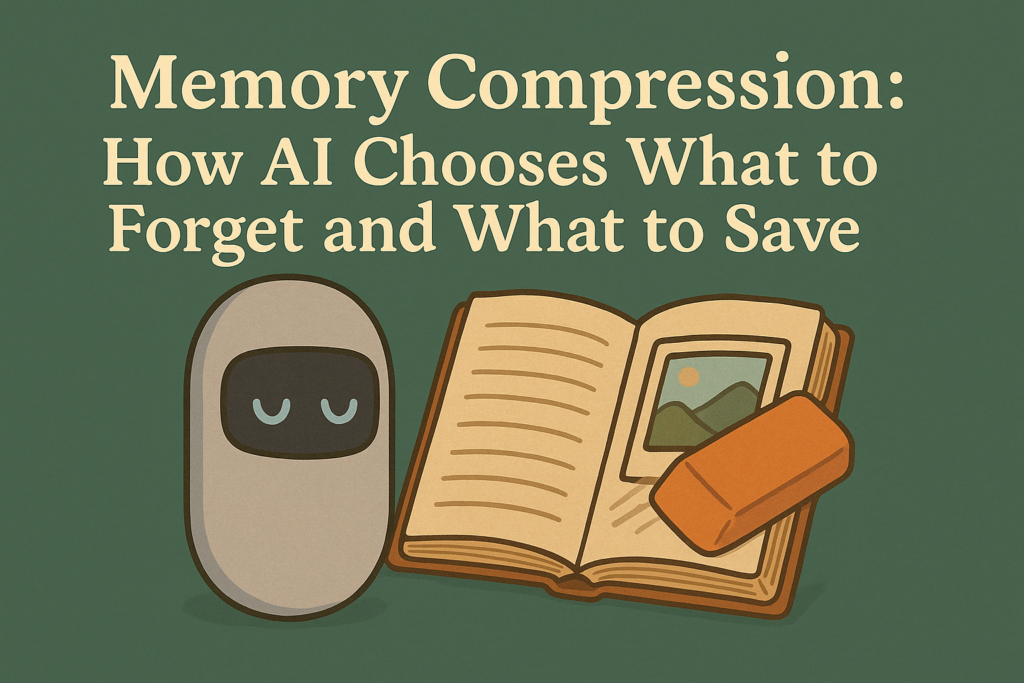
This is where memory compression comes in. And it’s not just a human trait anymore, AI systems are starting to learn this too.
What Is Memory Compression?
Memory compression is the process of reducing large, complex information into smaller, manageable formats while preserving its core meaning. Our brains do it naturally. You may forget the colour of your shirt at a birthday party, but you’ll remember the moment your friends surprised you. This selective recall is exactly what visual memory training works to strengthen.
Now, artificial intelligence is being trained to do the same.
Why AI Needs to Forget
Most people assume AI remembers everything. But in reality, constantly storing every single piece of data becomes inefficient, expensive, and overwhelming for machine learning models.
Just like humans, AI systems need to:
- Prioritise useful data
- Discard noise
- Compress large memory logs into key insights
This not only improves speed and storage, but it also helps AI make better decisions by focusing on patterns rather than raw data.
How AI Decides What to Keep
AI models, especially in areas like large language processing and recommendation engines, are programmed to “forget” low-value data.
Here’s how they typically filter:
- Relevance: Was the data useful or important to the task?
- Frequency: Has this data point appeared often enough to be a pattern?
- Recency: Is the information still up to date?
- Emotion/Engagement: In advanced models, emotional cues or user engagement can affect memory weight.
Think of it like the way social media algorithms remember the posts you interact with the most. The rest gets pushed down, or forgotten entirely.
The Human-AI Parallel
Interestingly, the way AI compresses memory mirrors how we do it:
- Summarisation: Both AI and humans summarise conversations or experiences.
- Tagging: AI uses metadata to tag context; humans do this emotionally (“best summer ever”).
- Association: Machines connect data points, just like we connect memories to smells, songs, or visuals.
This parallel is why AI is becoming more intuitive, and why tools like TimeLock feel more natural to use.
Memory Compression in Practice
Here are real-world examples of how memory compression shows up in AI:
- ChatGPT summarising a conversation thread to continue it later
- Google Photos showing “Highlights” from an album rather than every image
- Spotify creating playlists based on listening history but filtering out skipped tracks
- Smart assistants learning routines but discarding irrelevant commands
Each case shows AI selectively storing memory, just like us.
Implications for Digital Time Capsules
If you’re using a memory capsule app like Time Lock, you might wonder: what happens if AI starts curating your memories for you?
Here’s how it can enhance, not diminish, the experience:
- Smart Highlights: AI can suggest the most emotionally rich or meaningful content to save.
- Duplicate Reduction: Forget saving 10 nearly identical photos,AI picks the best one.
- Memory Maps: Algorithms can group memories by theme, place, or emotional tone.
- Contextual Additions: AI can add contextual metadata, like what music was playing, what the weather was, or trending events of the day.
Risks: When AI Gets It Wrong
Of course, memory compression has its risks. AI may discard something meaningful that looks mundane. Or it might keep something just because it’s popular or recent, not important.
That’s why human oversight is essential. Memory curation should always be a collaboration between human input and AI suggestion.
The Future: Intentional Memory Design
As AI grows more advanced, we’re approaching an age where we don’t just capture memories, we design them.
Imagine:
- A future self walking through a holographic gallery of their most treasured moments
- A child receiving a fully compressed, narrated timeline of their early years
- Memories organised by emotion, significance, and theme, not just date
This is the power of AI-enhanced memory keeping. But it starts by deciding what’s worth remembering today.
Final Thoughts: Curate, Don’t Hoard
The real magic of a memory time capsule isn’t in how much you store, it’s in how meaningfully it’s preserved.
Whether you’re relying on your own instincts or leaning on AI to help, the goal is the same: to compress life into something you’ll want to revisit, not scroll past.
TimeLock helps you build that memory archive intentionally, beautifully, and securely. Because what you choose to remember shapes who you become.
Related Blog Posts to Explore
- AI, VR & Memory: The Future of Remembering
- Future Self Letters: A Tool for Mental Clarity
- Digital Memory Keeping vs Traditional Journaling
- Top 5 Apps for Preserving Digital Memories in 2025
Join us on the mission.